

Pregnancy discrimination remains a serious issue in workplaces across the United States, affecting both job applicants and current employees. Studies show that nearly 1 in 5 working women report experiencing unfair treatment related to pregnancy at work.
This type of discrimination occurs when an employer treats someone unfavorably due to pregnancy, childbirth, or related medical conditions. It can appear in many forms—such as refusal to hire, denial of promotions, lack of reasonable accommodations, or even wrongful termination.
Understanding real pregnancy discrimination examples is essential for recognizing these unlawful practices. In this guide, we’ll break down the most common workplace scenarios, explain your legal rights, and show how these situations can lead to a pregnancy discrimination claim.
What Is Pregnancy Discrimination?
Pregnancy discrimination occurs when an employer treats an employee or job applicant unfairly because of pregnancy, childbirth, or related medical conditions. It is a form of workplace discrimination that is prohibited under federal law, including the Pregnancy Discrimination Act.
About 20% of working women state that they face pregnancy discrimination at their workplace. This injustice refers to the unfair treatment of female employees due to their pregnancy.
The discrimination can occur in direct form by a company. For instance, your workplace may reduce your salary after learning about your pregnancy.
Pregnancy discrimination examples may also be indirect such as making pregnant employees work specific hours or overtime.
The main feature of discrimination is that you will suffer from unfair behavior at your workplace. This injustice may be done by your colleagues, senior managers, or employers.
A Brief Overview Of The Pregnancy Discrimination Act
The Pregnancy Discrimination Act (PDA) of 1978 protects female employees from facing injustices due to their pregnancy. For instance, the law prevents companies from firing workers unjustly because of their pregnancy, childbirth, or other medical conditions.
A key feature of this act is that it refers to pregnancy as a temporary illness. This means the workplace shouldn’t treat pregnant employees any differently than they would treat a person with common cold.
The PDA also requires pregnant workers to receive suitable accommodations for their condition. It also protects pregnant applicants through specific rules such as:
- Hiring managers cannot ask about an applicant’s pregnancy status
- It is illegal to ask applicants if they plan on having children
Despite that, many workplaces still engage in pregnancy discrimination.
Top 3 Pregnancy Discrimination Cases Won
Many pregnancy discrimination examples lead to people filing cases against their employers. The good news is that many individuals have received victories in their pregnancy discrimination lawsuits.
Here are the top three pregnancy lawsuits that ended up in victories:
1. Latowski V. Northwoods Nursing Center
An assistant at a nursing center was told to provide the workplace with a doctor’s note stating she has no working restrictions due to pregnancy. Jennifer Latowski couldn’t submit such a note to her workplace. The company unjustly terminated her because of this reason.
Upon filing a case against the nursing center, the EEOC found the company guilty of discriminating against pregnant workers.
2. EEOC V. HCS Medical Staffing
The EEOC filed a case against HCS Medical Staffing in 2012 for firing an employee, Roxy Leger unjustly. Leger was recovering from a C-section at a hospital when her job was terminated without probable grounds.
A court letter was sent to the workplace to which the EEOC didn’t receive a response. So the court gave a default judgment in favor of Roxy Leger.
3. EEOC V. Houston Funding
Houston Funding fired a worker because she was lactating in the workplace. Termination due to such acts comes under sex and pregnancy discrimination examples.
This is why the EEOC won a case against Houston Funding in 2013 for discrimination.
What Is The Average Settlement For Pregnancy Discrimination?
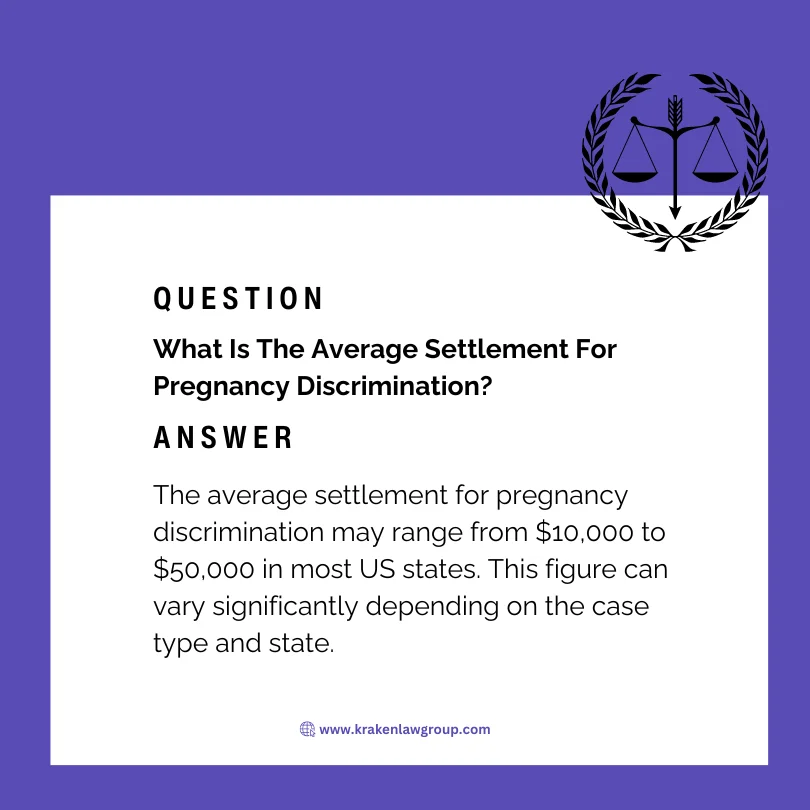
The average settlement for pregnancy discrimination may range from $10,000 to $50,000 in most US states. This figure can vary significantly depending on the case type and state.
For instance, some pregnancy discrimination lawsuits may receive a verdict of $1 million in compensation for victims. Consulting a workplace discrimination lawyer can help you understand the worth of your case.
Top 7 Pregnancy Discrimination Examples In The Workplace
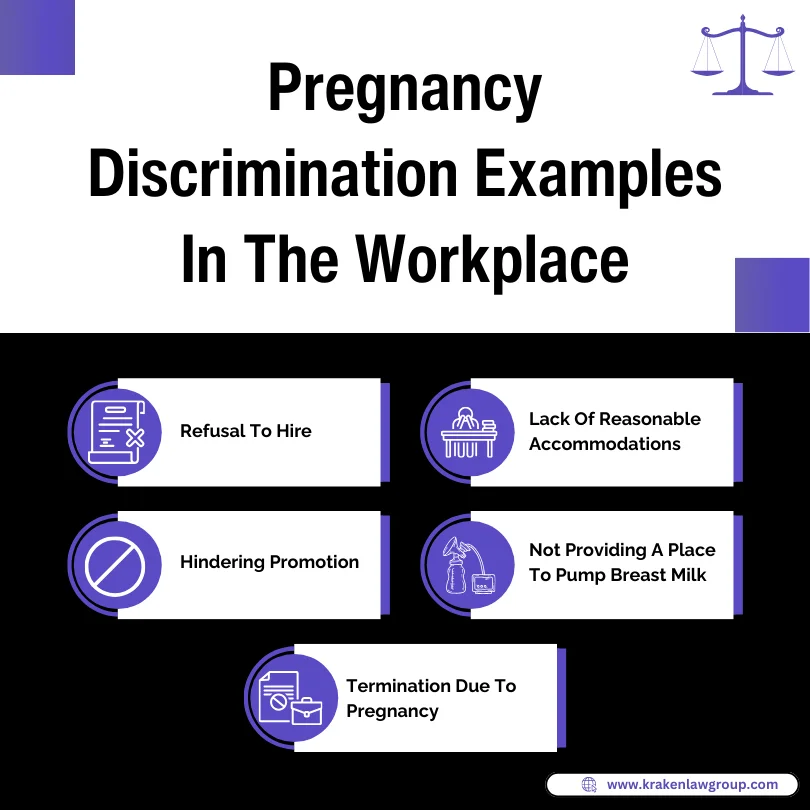
Let’s look at the top pregnancy discrimination examples in the workplace to help you:
1. Refusal To Hire
One of the top pregnancy discrimination examples is not receiving a job due to your condition. Your baby bump may be visible in an interview which can lead to the company being aware of your pregnancy.
The hiring manager may refuse to hire you despite your qualifications. This is a prime example of pregnancy discrimination that many female applicants complain about.
Remember according to the Pregnancy Discrimination Act, recruiters cannot ask you questions about pregnancy. If they do so, they’re violating the federal law which allows you to file a case against them.
If a recruiter asks you several questions about pregnancy or having children in the future, they may be engaging in a bias. This is a clear indicator of pregnancy discrimination, so be sure to notice such signs.
2. Lack Of Reasonable Accommodations
The federal law encourages workplaces to offer reasonable accommodations to pregnant employees. A key feature of the PDA is that pregnancy must be seen as any other temporary illness.
This means if a workplace is assigning an employee light duties due to a condition such as fever, they should offer a pregnant employee similar accommodations. That is because a workplace must not distinguish temporary illnesses.
Another example of a reasonable accommodation is altering your working hours around morning sickness signs. As long as the accommodation is reasonable, a company must offer it under federal law.
Despite that, most workplaces don’t offer any type of accommodation to pregnant employees. They may also make things harder by burdening the worker with overtime or heavy-duty tasks.
3. Termination Due To Pregnancy
When you encounter different pregnancy discrimination examples, you’ll notice termination to be a common case. Many companies fire pregnant employees without probable reasons.
They may engage in wrongful termination in specific ways such as:
- Firing workers who recently gave birth and are recovering in a hospital
- Eliminating an employee’s position a few days or months before their delivery
- Firing working mothers after giving them maternity leave
If a company fires you because you’re pregnant or have given birth recently, they are violating the PDA. This means you can hold them liable in court by filing a complaint with the EEOC.
Companies that are found guilty of wrongful termination due to pregnancy discrimination examples must offer financial compensation.
4. Hindering Promotion Because Of Pregnancy
Many senior managers believe pregnant women or working mothers are not suitable for promotions. That is because they perceive their children would hinder them from performing their work tasks with high efficiency.
If your workplace passes you for a promotion by giving it to another less qualified employee, you may see it as a sign of pregnancy discrimination. The company may use excuses such as you not being a good fit for a senior role or other reasons.
The Title VII of the Civil Rights Act makes it illegal for workplaces to refuse to promote pregnant workers. If you notice such discrimination signs, you may have a viable claim against the company.
5. Not Providing A Place To Pump Breast Milk
Pregnancy discrimination examples may include indirect forms of bias such as the workplace not offering a pumping space. Lactation is a common act during and after pregnancies.
As per the Affordable Care Act (ACA), a workplace must offer pregnant employees:
- An unpaid lactation break
- A private space in the office for pumping milk
It is also important for the private space to be different than a bathroom and free from other non-pregnant coworkers. Remember this law mainly covers workplaces with more than 50 employees.
If your workplace falls under this category and refuses to offer a private space, you may file a complaint against them.
6. Verbal Harassment
Pregnancy discrimination examples also include verbal harassment cases. Your colleagues may pass negative comments against you due to your baby bump or other pregnancy-related changes.
A senior manager may also call you with different demeaning names to decrease your confidence. Such types of harassment may range from minor negative comments to the use of harsh or abusive language.
Any worker or manager who engages in verbal harassment can be found guilty of pregnancy discrimination. Remember to record harassment incidents by writing details on a paper every time.
This can help you file a complaint with the EEOC and provide evidence against pregnancy discrimination examples easily.
7. Retaliating After Filing A Pregnancy Discrimination Claim
Many employees are afraid of filing internal complaints against pregnancy discrimination examples in their company. That is because employers may retaliate after they receive news about a complaint from the HR department.
In the US, federal and state laws prevent employers from taking adverse actions against workers who file discrimination claims. These actions include:
- Firing
- Demotion
- Transfer
- Workload increase
- Promotion denial
- False negative performance reviews
A company cannot take these actions against people who file discrimination complaints. If they do so, you may sue them legally.
FAQs About Pregnancy Discrimination
1. What qualifies as pregnancy discrimination?
Pregnancy discrimination occurs when an employer treats an employee or applicant unfairly because of pregnancy, childbirth, or related medical conditions. This includes being denied a job, promotion, reasonable accommodations, or being terminated due to pregnancy.
2. What are common examples of pregnancy discrimination?
Common examples include refusing to hire a pregnant candidate, reducing work hours, denying maternity leave, failing to provide accommodations, or firing an employee because of pregnancy.
3. Is pregnancy discrimination illegal in the workplace?
Yes, pregnancy discrimination is illegal under federal law, including the Pregnancy Discrimination Act. Employers must treat pregnant employees the same as others with similar abilities or limitations.
4. Can I be fired for being pregnant?
No, it is illegal for an employer to fire you solely because you are pregnant. If termination is directly related to pregnancy, you may have grounds for a legal claim.
5. What should I do if I face pregnancy discrimination?
If you experience pregnancy discrimination, document all incidents, report the issue to your HR department, and consider consulting an employment attorney to understand your legal options.
6. Do employers have to provide accommodations for pregnancy?
In many cases, yes. Employers may be required to provide reasonable accommodations, such as modified duties or additional breaks, especially if similar accommodations are given to other employees.
Contact An Attorney To Deal With Pregnancy Discrimination At Work
This is all you must know about pregnancy discrimination examples in the workplace. Many companies engage in this bias by firing workers once they go on maternity leave or lactation breaks.
If you’re suffering from pregnancy discrimination examples at your company, hiring a lawyer may help you. An attorney can determine the worth of your case and fight against your employer.
So contact us today to learn more about starting a pregnancy discrimination lawsuit in Florida.